Zara For Him Red Edition and Baccarat Rouge 540 Extrait: The $455 Question
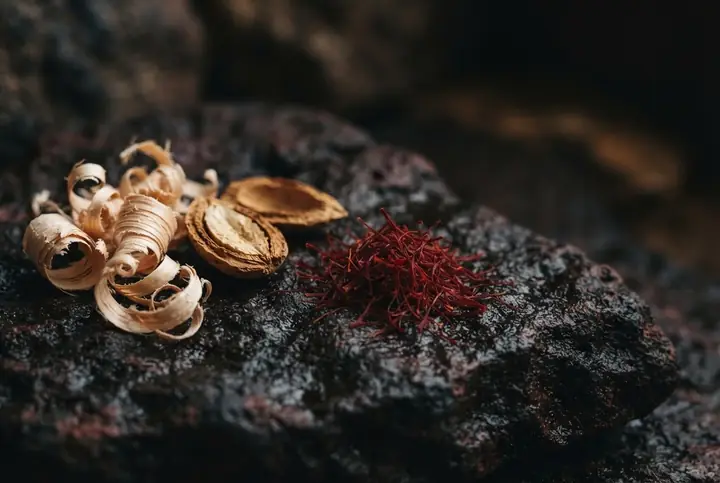
Zara For Him Red Edition costs $39.90 and Maison Francis Kurkdjian Baccarat Rouge 540 Extrait de Parfum costs $495. Both list the same five notes: bitter almond, saffron, egyptian jasmine, virginia cedar and ambergris. That is a $455.10 gap over an identical published note list, which is the widest price gap of all 50 dupe pairings on the Accord Twin list, and it still does not guarantee they smell the same.
There are 50 dupe pairings on the Accord Twin list. 41 of them list identical notes, word for word, and this one has the widest price gap of all 50, at $455.10.
A gap that size over an identical note list is worth a whole guide. Plenty of dupe claims rest on one or two shared notes and a lot of hopeful language. This one rests on five out of five, on a bottle you can buy for the price of a takeaway.
What follows is the honest version: what the shared note list actually proves, what it definitely does not prove, where the $455.10 goes, and the specific circumstances in which you should buy the expensive one anyway. If you only want the verdict, it is near the end.
What exactly is Zara For Him Red Edition a dupe of?
Zara For Him Red Edition is the Accord Twin dupe of Baccarat Rouge 540 Extrait de Parfum by Maison Francis Kurkdjian, at $495. It is not paired with the more familiar Baccarat Rouge 540 at $360, which is a different formulation with a different published note list, and that distinction comes back later in this guide.
Here are the two bottles as Accord Twin lists them:
| Bottle | Brand | Price | Family | Listed notes |
|---|---|---|---|---|
| For Him Red Edition | Zara | $39.90 | Floral Amber | bitter almond, saffron, egyptian jasmine, virginia cedar, ambergris |
| Baccarat Rouge 540 Extrait de Parfum | Maison Francis Kurkdjian | $495 | Floral Amber | bitter almond, saffron, egyptian jasmine, virginia cedar, ambergris |
Same family. Same five notes, in the same order. A $455.10 difference.
Accord Twin holds no wear hours and no concentration figure for either bottle, so this guide gives none. Where the list holds no figure it stays blank rather than estimated, because an estimate presented as data is worse than an honest gap.
Extrait de parfum is the top of the concentration ladder as Ulta Beauty's guide sets it out, which is what the word on the Kurkdjian box is claiming.
Do they really share the same notes, or is that marketing?
The note lists genuinely match: Zara For Him Red Edition and Baccarat Rouge 540 Extrait de Parfum both list bitter almond, saffron, egyptian jasmine, virginia cedar and ambergris. What that means is narrower than it sounds, so it is worth walking through the notes.
Bitter almond is written first in both lists, though the order on the Accord Twin list is not a pyramid. It is usually described as sweet with a sharp, slightly medicinal edge, closer to marzipan or amaretto than to a nut. Saffron is the costly spice of the five, usually described as leathery and slightly bitter, a little like warm hay, and six of the 122 bottles on the list name it, both Baccarat Rouge 540 bottles among them.
Egyptian jasmine is the floral note, and jasmine is indolic, meaning it carries a faintly animal quality under the white-flower sweetness. Virginia cedar is usually described as pencil-shaving dry, and it sits against the sweeter notes rather than adding to them.
Why is saffron suddenly everywhere?
Saffron is the fastest-climbing note in this entire dataset, up almost nineteen times since the 1980s.
Across 57,598 dated fragrances in the Accord Twin corpus, counted as a share of all note mentions in each decade:
| Decade | Saffron |
|---|---|
| 1980s | 0.04% |
| 1990s | 0.08% |
| 2000s | 0.32% |
| 2010s | 0.61% |
| 2020s | 0.84% |
2,381 releases name it. The climb is steady rather than a spike, and it started well before Baccarat Rouge 540 launched in 2015, which is the useful part: a saffron note in a cheap bottle is not by itself evidence that anything is imitating anything. Saffron was already on the way up.
These are notes as brands list them rather than measured content, and the 2020s rest on 4,290 dated releases, so treat the last column as the weakest one.
What does ambergris mean on these two note lists?
Ambergris on these two note lists is very unlikely to mean the whale material: genuine ambergris comes from sperm whales and is legally restricted in a number of markets, and a modern bottle is far more likely to use a synthetic such as ambroxan.
Four bottles on the Accord Twin list name ambergris, from this $39.90 Zara to the $495 extrait, and none of the four lists can say which material sits behind the word. The guide to ambergris, ambroxan and cetalox applies directly here: the word on the note list describes an effect, not a receipt for an ingredient.
So the lists match. Five for five, which is the strongest kind of match a published note list can show, with the caveat the next section is about.
It does not mean whale. NOAA Fisheries states that you may not collect, keep, or sell ambergris in the United States, because it counts as a part from an endangered marine mammal, so what a note list calls ambergris is a synthetic standing in for it.
Does an identical note list mean an identical smell?
An identical note list does not mean an identical smell.
A note list is a description of what a fragrance is meant to evoke. It is not a formula, not an ingredients declaration, and not a set of proportions. Two fragrances can publish the same five notes and still be told apart side by side. Three things vary underneath an identical list.
Proportion comes first. A composition heavy in saffron and one with a trace of it can both honestly list saffron, and the ratio decides what you smell, and no brand publishes it. Material quality comes second. Saffron, jasmine and cedar all exist at very different grades and prices, and a natural jasmine absolute and a cheap synthetic jasmine base both get called jasmine, though they are not the same material. A note list cannot show which of those differences you would notice, or when.
Concentration comes third. The $495 bottle is sold as an Extrait de Parfum, the heaviest standard concentration, and Accord Twin holds no concentration figure for the Zara, so this guide claims none.
How strong is a five-for-five note match?
A five-for-five note match is the strongest starting hypothesis a note list can give, and it is common on the Accord Twin list rather than rare: 41 of the 50 approved pairings share all five listed notes.
Among those 41, this one has the widest price gap at $455.10, just ahead of Aldi Lacura Her Reign against Creed Aventus For Her at $451 and Lattafa Al Qiam Silver against Bvlgari Tygar at $450.01. That $9 Aldi bottle also holds the widest price ratio on the list.
It helps to know the other end of the scale. When Accord Twin checked 274 published dupe claims against the listed notes on both sides, 83 showed almost no overlap. Five shared notes put this pairing at the opposite end from those, which is a reason to test it, not a reason to skip the test.
Where does the $455.10 actually go?
No brand publishes where the $455.10 goes, so the honest answer is a list of candidates rather than a breakdown.
Materials can differ: saffron and jasmine come in very different grades, and a $495 budget leaves room for grades a $39.90 bottle cannot reach, though neither list says which went in. Concentration can differ, since the $495 bottle is sold as an extrait. Then there are costs that never reach your nose: heavy glass, a lacquered cap, a boutique with staff, and a brand's position.
Margin differs too. Zara sells fragrance as a volume product inside a clothing business, while Maison Francis Kurkdjian, a niche house, sells fragrance as the product. Those are different economics before a single material is bought.
The honest summary: $495 is about 12 times $39.90, and nothing on either note list shows 12 times the fragrance. Which of the candidates you value is a real question, and the answer is allowed to be the name on the bottle, because wearing something you find beautiful in a bottle you like owning is a legitimate reason to spend money.
What about the standard Baccarat Rouge 540 at $360?
The standard Baccarat Rouge 540 at $360 is a different bottle from the $495 extrait: the two share a name but not an identical note list, and the $360 version has three cheaper pairings of its own.
Here is how the two originals compare on the Accord Twin list, alongside the three cheaper bottles paired with the $360 version:
| Bottle | Price | Listed notes | Shared with its pairing |
|---|---|---|---|
| Baccarat Rouge 540 Extrait de Parfum | $495 | bitter almond, saffron, egyptian jasmine, virginia cedar, ambergris | all five, with For Him Red Edition |
| Baccarat Rouge 540 | $360 | saffron, amberwood, jasmine, cedar | see below |
| Zara Red Temptation | $39.90 | saffron, amber, orange blossom, cedar | saffron, cedar |
| Al Haramain Amber Oud Gold Edition | $95 | amber, vanilla, white flowers, musk | none, vibe-alike only |
| Ariana Grande Cloud | $75 | lavender blossom, praline, coconut, musk | none, vibe-alike only |
Two things fall out of that table. First, the extrait pairing is far better evidenced: five shared notes, against two for Red Temptation and none for the other two alternatives. Second, Cloud and Amber Oud Gold Edition share no listed notes with Baccarat Rouge 540 at all. They are on the Accord Twin list as vibe-alikes, a pairing on mood rather than on published notes, which is a much weaker claim. The fuller treatment is in the Baccarat Rouge 540 comparison.
So the closest match on the Accord Twin list to either Baccarat Rouge 540, on the evidence of the note lists, is For Him Red Edition against the extrait, not any of the three alternatives paired with the $360 bottle.
Who should buy the $39.90 Zara?
Buy the $39.90 Zara if you want to find out whether this style suits you, want a bottle you can wear without doing sums, or already own something in this family and want a second one for ordinary days.
The first is the strongest reason. At $39.90 the downside of being wrong is a takeaway, and the matching note list means you are testing the right style rather than an approximation of it.
The second is underrated. A $39.90 bottle is one you can over-apply, take to a festival or leave in a hot car without a second thought, and that freedom has real value.
The third is simple arithmetic. If a bottle in this family already sits on your shelf for special days, a $39.90 one for ordinary days costs less than a decant of the $495 original.
Who should not buy the Zara?
Do not buy the Zara if you want Baccarat Rouge 540 Extrait itself as an object, if you know the original well enough to be disappointed, or if you need a fragrance for an occasion that cannot be re-run.
If part of what you want is the bottle on the shelf and the name on the box, a dupe will not deliver it, and you may end up buying the original anyway, having spent $39.90 on the detour. That is not a foolish preference. It is just not one a note list can satisfy.
If you have smelled Baccarat Rouge 540 Extrait and love a specific quality in it, you are the person best placed to notice any difference. And if you need it for a wedding or a first meeting, buy the thing you have already tested on your own skin.
And do not buy either yet if you have not smelled this style at all. Bitter almond and saffron is not a combination everyone enjoys, and a note list cannot tell you which camp you are in, so sample before you spend anything, including the $39.90.
How do you test this without wasting money?
Spend the smallest amount that answers the question, and answer it on your own skin over weeks rather than in a shop over minutes.
For the expensive bottle, a decant is the sensible route. It is a portion of a full-size bottle hand-split into a smaller vial, and it gives you weeks of ordinary wearing for a fraction of $495. The guide to how decants work and when to skip them covers what to watch for, and this pairing is close to the ideal case for one.
For the Zara, there is no point decanting a $39.90 bottle. Buy it.
Then run them properly. Wear the Zara for a full week, on ordinary days, at the dose you would actually use, and note whether you reach for it. Then do the same with the decant.
The wear figures rest on evaporation rather than opinion. Schwarzenbach and Bertschi of Givaudan sampled the air above treated skin in 2001 and watched the concentration fall away over several hours.
Why does a side-by-side sniff test mislead?
A side-by-side sniff test misleads because your nose adapts within minutes to whatever is closest to it, and a direct comparison flatters differences that may not matter to you in daily wear.
So the question is not "can I detect a difference in a direct comparison?" You may well be able to, and so what. The question is "on an ordinary Tuesday, does the $39.90 bottle do the job I wanted the $495 bottle for?"
For some people, on this pairing, the answer will be yes, and for some it will be no, and finding that out for $39.90 is a good outcome too. A decant also buys time, which a sniff test cannot: weeks of wear are what show whether a fragrance still appeals once the novelty has gone.
What to remember
- Zara For Him Red Edition ($39.90) and Baccarat Rouge 540 Extrait de Parfum ($495) list the same five notes: bitter almond, saffron, egyptian jasmine, virginia cedar and ambergris. A $455.10 gap.
- Zara For Him Red Edition has the widest price gap of the 50 pairings Accord Twin publishes, and is one of the 41 where the two note lists match completely.
- An identical note list is a strong starting hypothesis, not proof of an identical smell. Proportion, material grade and concentration all vary underneath it and none of them are published.
- It is the extrait at $495 that matches, not the more familiar Baccarat Rouge 540 at $360, which has a different published note list.
- Cloud ($75) and Amber Oud Gold Edition ($95) share no listed notes with Baccarat Rouge 540. They are vibe-alikes, which is a much weaker claim than this pairing.
- Buy the Zara to find out whether the style suits you. Buy the original if you want that specific fragrance as an object, or if you already know it well enough to be disappointed.
Common questions
Is Zara For Him Red Edition a Baccarat Rouge 540 dupe?
It is the Accord Twin listed dupe of Baccarat Rouge 540 Extrait de Parfum at $495, not the standard Baccarat Rouge 540 at $360. Both list the same five notes: bitter almond, saffron, egyptian jasmine, virginia cedar and ambergris. For Him Red Edition costs $39.90.
How much cheaper is the Zara?
$455.10. For Him Red Edition is $39.90 and Baccarat Rouge 540 Extrait de Parfum is $495. That is the largest price gap across all 50 dupe pairings Accord Twin publishes.
Do they smell exactly the same?
No one can promise that, and Accord Twin will not. The published note lists are identical, which is the strongest evidence a note list can give, and 41 of the 50 pairings on the list reach it, but proportion, material quality and concentration all vary underneath a note list, and neither brand publishes any of them.
What is the difference between Baccarat Rouge 540 and the Extrait de Parfum?
They are different formulations with different published note lists. The $360 version lists saffron, amberwood, jasmine and cedar. The $495 extrait lists bitter almond, saffron, egyptian jasmine, virginia cedar and ambergris. It is the extrait that For Him Red Edition matches.
Is there real ambergris in either bottle?
Very unlikely in either. Genuine ambergris comes from sperm whales, is legally restricted in a number of markets and is priced by the gram. Modern bottles typically use synthetics such as ambroxan to achieve the effect, and the note list describes that effect rather than declaring an ingredient.
Should I buy the cheap one or save for the expensive one?
Buy the $39.90 bottle first if you want to learn whether this style suits you, because being wrong costs almost nothing. Buy the original if you specifically want that fragrance as an object, or if you already know it well and would notice what is missing.
Prices here are the figures Accord Twin lists, last checked September 2026. They are a reference for comparing bottles, not one shop's till: the same bottle moves with size and retailer, so check the shop before buying.
Tell Accord Twin the expensive bottle you are circling and it will name three at three prices, with the notes each one actually shares.
Find your three bottles