Ambergris, Ambroxan and Cetalox: What You Are Actually Smelling
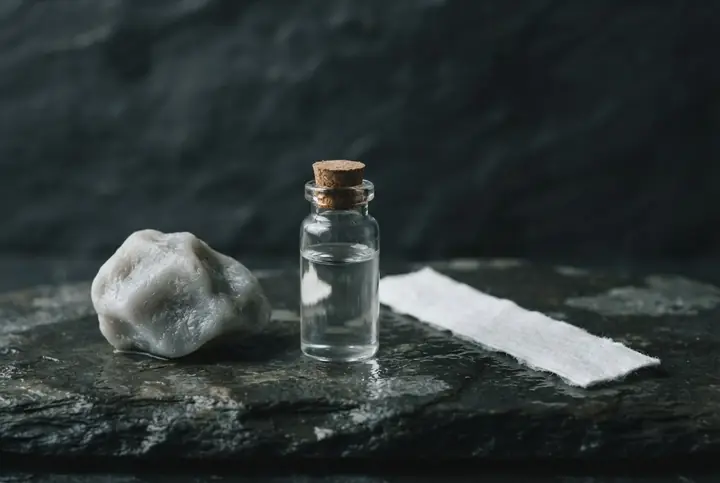
Ambergris is a waxy material that forms in the digestive system of sperm whales and was once prized as a perfume fixative. Almost no modern bottle contains it. What most bottles use instead is a synthetic such as ambroxan or cetalox. Four bottles on the Accord Twin list name theirs outright: three list ambroxan, from Lattafa Al Qiam Silver at $49.99 to Bvlgari Tygar at $500, and Juliette Has a Gun Not a Perfume at $210 lists cetalox.
Ambergris is one of the most romantic words in perfumery and one of the most misleading. Search it and you get shipwreck stories, beachcombers and figures per kilogram. Then you read the note list on a bottle you already own and the word is not there at all.
That is not a trick. It is a clear example of something that runs through fragrance: the note you read is a description of a smell, not a receipt for an ingredient. Here is what ambergris is, what replaced it, and which four bottles on the Accord Twin list print the replacement's real name.
What is ambergris, actually?
Ambergris is a solid, waxy substance that forms in the digestive system of sperm whales and is expelled, after which it floats and weathers at sea for years before washing ashore. Fresh, it is unpleasant. Aged by salt water and sunlight, it turns pale and develops the smell perfumers wanted: warm, slightly marine, faintly sweet, and above all persistent.
That persistence was the point. Before synthetic fixatives, ambergris was one of the few materials that could hold a composition together and slow down how fast the rest of it evaporated. It was a functional ingredient before it was a luxurious one.
Two things pushed it out of mainstream perfumery. It comes from the sperm whale, a protected species, which makes it legally and ethically difficult in a number of markets. And it is found rather than made, so supply is random and the price is unstable. An industry producing millions of identical bottles cannot build a formula on something that washes up by chance.
What replaced ambergris in modern perfume?
Synthetic molecules replaced ambergris, and two of them, ambroxan and cetalox, are printed by name on note lists.
Ambroxan is usually described as dry, warm, slightly mineral and skin-like. It is stable and can be made to order, unlike a material that washes up by chance, and three of the 122 bottles on the Accord Twin list name it: Lattafa Al Qiam Silver, Dior Sauvage and Bvlgari Tygar.
Cetalox is a closely related molecule, usually described as cleaner and softer, closer to warm skin and laundry than to a spice.
Neither one is a fake version of ambergris in the way a costume pearl is a fake pearl. They are specific materials with their own smell, chosen because they do the job ambergris used to do without the whale.
| Material | Origin | Smell in one line | Still in use? |
|---|---|---|---|
| Ambergris | Sperm whale, weathered at sea | Warm, marine, sweet, extremely persistent | Almost never in mass-market perfume |
| Ambroxan | Synthetic | Dry, warm, mineral, close to the skin | Very widely |
| Cetalox | Synthetic | Clean, soft, warm skin and laundry | Widely |
Law is the other half of the answer. NOAA Fisheries states that you may not collect, keep, or sell ambergris in the United States, because it counts as a part from an endangered marine mammal.
How fast has ambroxan taken over?
Ambroxan appears on labels nearly twelve times as often as it did in the 1980s.
Counted across 57,598 dated fragrances in the Accord Twin corpus as a share of all note mentions per decade:
| Decade | Share of all note mentions |
|---|---|
| 1980s | 0.03% |
| 1990s | 0.01% |
| 2000s | 0.03% |
| 2010s | 0.18% |
| 2020s | 0.35% |
Ambergris itself, the word rather than the material, holds steady at 0.59 percent to 0.82 percent across the same period. So the synthetic is not replacing the word on labels. It is being printed alongside it, which is exactly why a note list cannot tell you which one is in the bottle.
These are notes as brands list them rather than measured content, and the 2020s rest on 4,290 dated releases, so treat the last column as the weakest one.
What is the difference between cetalox and ambroxan?
Cetalox and ambroxan are two different synthetic molecules that stand in for ambergris, and the difference a note list shows is which one the brand chose to print. Both are made rather than found, both are stable, and both give the warm, dry, skin-like effect that ambergris used to give.
The usual descriptions differ slightly. Ambroxan is described as dry, warm and faintly mineral. Cetalox is described as cleaner and softer, closer to warm skin and laundry than to a spice. Those are the words the industry uses for the materials, not a report from a wrist, because Accord Twin has never smelled either one.
On the Accord Twin list the split is three to one. Lattafa Al Qiam Silver at $49.99, Dior Sauvage at $135 and Bvlgari Tygar at $500 name ambroxan; Juliette Has a Gun Not a Perfume at $210 names cetalox, and names it first, ahead of white musk, amber and clean air. Four bottles out of 122, which is how rare it is for a brand to print the molecule at all.
Which bottles on the Accord Twin list name the synthetic on the label?
Four of the 122 bottles on the Accord Twin list print the actual molecule, few enough to be worth knowing by name, and the rest name amber, ambergris or nothing of the kind.
| Bottle | Price | Family | Wear | Listed notes |
|---|---|---|---|---|
| Dior Sauvage | $135 | Aromatic | ~6h | bergamot, sichuan pepper, ambroxan, lavender |
| Juliette Has a Gun Not a Perfume | $210 | Soft Amber | ~5h | cetalox, white musk, amber, clean air |
| Lattafa Al Qiam Silver | $49.99 | Citrus | — | grapefruit, ginger, ambrette, ambroxan, musk |
| Bvlgari Tygar | $500 | Citrus | — | grapefruit, ginger, ambrette, ambroxan, musk |
Not a Perfume is the one to notice, because cetalox is listed first, ahead of white musk, amber and clean air. On Sauvage's list, ambroxan sits with bergamot, sichuan pepper and lavender. The Sauvage and Urban Man Elixir guide sets that list beside its Armaf clone's. Al Qiam Silver and Tygar share an identical five-note list, because Accord Twin pairs the $49.99 bottle with the $500 one. The two come in different sizes, 100 ml against 125 ml, and the guide to Al Qiam Silver and Tygar works out the fair gap per millilitre.
If you want to learn what this family of materials smells like on your own skin, the cheapest lesson on the list is Lattafa Al Qiam Silver at $49.99, which lists ambroxan. Sauvage at $135 is the cheapest of the four with a published wear figure. A dash in the wear column means Accord Twin holds no figure for that bottle.
Is amber the same thing as ambergris?
Amber is not the same thing as ambergris, though the two words invite the confusion. Ambergris is the whale-derived material described above.
Amber, as a perfume note, is not fossilised tree resin and has nothing to do with the stone in a museum case. It is a blend effect, usually built from materials such as labdanum, benzoin, vanilla and resins, that reads as warm, sweet and slightly powdery. When a note list says amber, it is describing that accord. Amber is also the name of a family on Michael Edwards' Fragrance Wheel, which covers warm resinous fragrances as a group.
So two similar words are doing three jobs: an animal material, a sweet resinous accord, and a family on the wheel. Seven bottles on the Accord Twin list name amber as a note, including Lattafa Asad at $29.50, Zara Red Temptation at $39.90 and Al Haramain Amber Oud Gold Edition at $95. None of them is claiming to contain whale. The same gap between a name and a note list turns up again with oud.
Why does ambroxan smell like skin?
Ambroxan is usually described as smelling like skin because its character is low, warm and faintly salty rather than recognisably of something, the way lemon is lemon and a rose is a rose.
It is a large molecule that evaporates slowly, and many people cannot name it when they smell it in isolation. Under a citrus or a lavender, that is why the effect is so often described as warmth coming off the wearer rather than a scent sitting on top of them.
It also explains a familiar complaint, that an ambroxan-heavy bottle seems to disappear on the person wearing it. Noses adapt to smells that sit close and constant, and a smell with no obvious edge is easy to stop registering, so the wearer can lose it before anyone else does. The same two mechanisms, adaptation and a specific anosmia to one compound, are why some readers cannot smell musk at all.
It also stays put, and how long a material stays on skin is the thing Givaudan researchers measured in 2001 rather than anything a note list reports.
Can a note list tell you whether a bottle uses real ambergris?
A note list can tell you only what the brand chose to print: four bottles on the Accord Twin list name ambroxan or cetalox, and four others name ambergris itself, from Zara For Him Red Edition at $39.90 to the Baccarat Rouge 540 Extrait de Parfum at $495.
Those four ambergris lists cannot say whether the material is whale-derived, a synthetic such as ambroxan, or a blend built to suggest it. At $39.90 and $54 the likelier answer is not hard to guess, but a guess is all it is. Nor does any list say how much of the material a bottle contains. The descriptions in this guide, dry, mineral, skin-like, are how these molecules are commonly described, because Accord Twin has never smelled any of these bottles.
Should you pay more for a fragrance that claims real ambergris?
A claim of real ambergris is not a reason to pay more, because genuine ambergris is legally restricted in a number of markets, expensive, and inconsistent between pieces, and a widely distributed bottle at a normal price is unlikely to contain a meaningful quantity of it, whatever the marketing copy suggests.
More usefully, the claim tells you nothing about whether you will like the fragrance. What decides that is the effect on your skin, and you can test it for $49.99 with Lattafa Al Qiam Silver, $135 with Dior Sauvage or $210 with Juliette Has a Gun Not a Perfume. All three list their real material, and none asks you to take a whale story on trust.
Buy the smell, not the origin story.
What to remember
- Ambergris is a waxy material from sperm whales, once used as a fixative. It is almost never in modern perfume, for legal, ethical and supply reasons.
- Ambroxan and cetalox are the synthetics that replaced it. They are not fakes; they are their own materials with their own smell.
- Four bottles on the Accord Twin list print the molecule in their notes: Lattafa Al Qiam Silver ($49.99), Dior Sauvage ($135) and Bvlgari Tygar ($500) list ambroxan, and Juliette Has a Gun Not a Perfume ($210) lists cetalox.
- Amber is not ambergris. Amber is a sweet resinous accord and also a family on the Fragrance Wheel.
- Ambroxan is usually described as warm skin rather than a recognisable smell, and noses adapt to close, constant smells, so an ambroxan-heavy bottle can seem to fade on the wearer first.
- Four more bottles on the Accord Twin list print ambergris itself, from $39.90 to $495, and a note list cannot say whether that means the whale material or a synthetic.
Common questions
What is ambergris in perfume?
A waxy substance formed in the digestive system of sperm whales, weathered at sea, and historically used as a fixative because it is warm, slightly marine and extremely persistent. It is almost never used in modern commercial perfume, because it comes from a protected species and its supply is unpredictable.
Is ambroxan the same as ambergris?
No. Ambroxan is a synthetic molecule used in place of ambergris, usually described as dry, warm and mineral. It is stable and made to order, where ambergris is found by chance and restricted in a number of markets.
What is the difference between amber and ambergris?
Amber as a perfume note is a warm, sweet, resinous accord, usually built from materials such as labdanum, benzoin and vanilla. Amber is also a family on the Fragrance Wheel. Ambergris is a specific whale-derived material. The words look related but describe completely different things.
Which fragrances list ambroxan or cetalox as a note?
On the Accord Twin list, Lattafa Al Qiam Silver at $49.99 and Bvlgari Tygar at $500 list ambroxan, as does Dior Sauvage at $135, alongside bergamot, sichuan pepper and lavender, and Juliette Has a Gun Not a Perfume at $210 lists cetalox first, alongside white musk, amber and clean air. Only four of the 122 bottles on the list name the molecule at all.
Why can I not smell ambroxan on myself?
Most likely because noses adapt to smells that sit close and constant, and ambroxan is usually described as a warm, skin-like smell without an obvious edge. The wearer can stop registering it while it is still on the skin.
Prices here are the figures Accord Twin lists, last checked September 2026. They are a reference for comparing bottles, not one shop's till: the same bottle moves with size and retailer, so check the shop before buying.
Tell Accord Twin the warm skin-like fragrance you already wear and it will name three bottles at three prices, with the hours Accord Twin lists for each.
Find your three bottles