Oud Perfume: What It Is, and Why the Word on a Label Proves Little
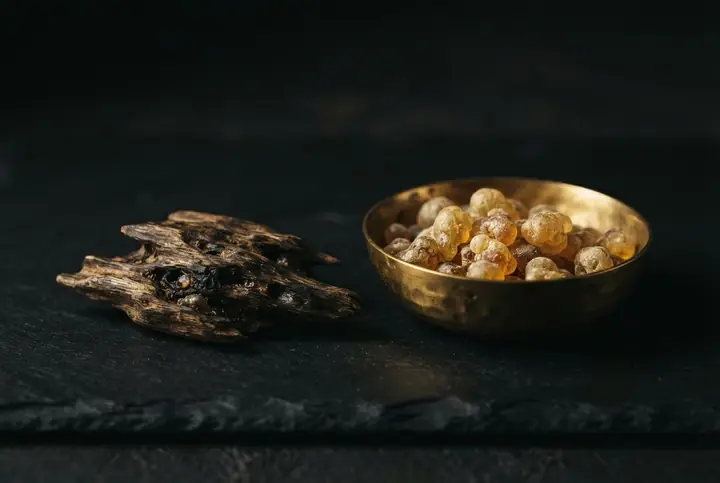
Oud is resinous heartwood produced by an Aquilaria tree after infection, and it is one of the most expensive raw materials in perfumery. The word on a label is no promise the material is inside. Not one of the 122 bottles on the Accord Twin list names oud among its notes, including the two with oud in their names: Al Haramain Amber Oud Gold Edition at $95 and Zara Virtuous Oud at $26.
Oud is one of the most talked-about materials in fragrance, and not one bottle on the Accord Twin list names it as a note. That is an awkward sentence for a fragrance site to write, so here is why it is true.
Accord Twin publishes the notes a fragrance lists and does not add notes that are not there. Going through all 122 bottles on the list looking for oud turns up none, including both bottles with oud in their names. That is not proof about the whole market, but it is a pattern worth understanding before you spend anything on the word.
What is oud, and why is it so expensive?
Oud, also called agarwood or oudh, is not a wood in the ordinary sense. It is a resin that an Aquilaria tree produces defensively after its heartwood becomes infected with a particular mould, a process a 2019 review in Frontiers in Plant Science ties to wounding and fungal infection. Uninfected Aquilaria wood is pale, light and close to odourless. The infected, resin-saturated heartwood is dark, dense and intensely aromatic.
Every part of that process works against supply. Infection happens in only a small share of wild trees. It takes years to develop. The tree has to be cut down to harvest it, and you cannot tell reliably from outside whether a given tree is worth cutting. Wild Aquilaria species are protected under international trade rules as a result.
The consequence is a raw material priced by the gram rather than the kilogram, and one of the few in perfumery genuinely capable of costing more than the bottle it is sold in. That economics is the reason the word appears on so many labels and the material appears in so few.
When did oud actually arrive in Western perfumery?
Oud does not appear anywhere in the Accord Twin corpus for the 1980s, not once.
Across 57,598 dated fragrances in the Accord Twin corpus, counted as a share of all note mentions in each decade, oud goes from literally zero to roughly one mention in every 126.
| Decade | Share of all note mentions |
|---|---|
| 1980s | 0.00% |
| 1990s | 0.04% |
| 2000s | 0.14% |
| 2010s | 0.17% |
| 2020s | 0.79% |
943 releases in the corpus name it, and nearly all of them are recent. That is a faster arrival than any other note measured here, and it is why a bottle from 1985 will not help you understand what the word means on a label today.
These are notes as brands list them rather than measured content, and the 2020s rest on 4,290 dated releases, so treat the last column as the weakest one.
What does real oud actually smell like?
Real oud is usually described as animalic, sharp and medicinal, which is a long way from the sweet, smooth accords that often carry its name.
Genuine oud is described as barnyard-like, with a smoky, leathery, slightly sour depth. Many people encountering it for the first time do not find it pleasant. It is closer to a very intense old leather and damp wood than to anything dessert-like, and it is powerful enough that a small quantity dominates a composition.
Much of what is sold as oud in the mainstream market is an accord built to suggest that character using safer, cheaper synthetic and natural materials, typically dialled towards sweetness and warmth. That accord can be genuinely good. It is simply a different thing from the material it is named after, in the same way that ambroxan is a different thing from ambergris.
Wear time is a separate question from character, and the figures Accord Twin publishes rest on how fast materials leave skin, which Givaudan researchers measured in 2001.
Does any bottle on the Accord Twin list contain oud?
No bottle on the Accord Twin list names oud among its notes: zero of 122, including both bottles with oud in their names, Al Haramain Amber Oud Gold Edition at $95 and Zara Virtuous Oud at $26.
| Bottle | Price | Family | Concentration | Wear | Listed notes |
|---|---|---|---|---|---|
| Al Haramain Amber Oud Gold Edition | $95 | Amber | EDP | ~8h | amber, vanilla, white flowers, musk |
| Zara Virtuous Oud | $26 | Water | — | — | marine notes, bergamot, rosemary, clary sage, geranium |
Amber Oud Gold Edition lists amber, vanilla, white flowers and musk. Virtuous Oud lists marine notes, bergamot, rosemary, clary sage and geranium, sits in the Water family, and is the bottle Accord Twin pairs with Giorgio Armani Acqua di Giò Parfum at $155. A dash means Accord Twin holds no figure for that field.
This is not an accusation. Names are marketing, note lists are description, and the two are allowed to differ. But it is a clean illustration of why reading the note list is more useful than reading the name.
How can you tell if a fragrance really contains oud?
You often cannot tell with certainty whether a fragrance contains real oud, but four signals help.
First, price. Real oud in meaningful quantity is difficult to reconcile with a mass-market price, and a widely distributed bottle in the ordinary designer range is unlikely to contain much, if any. Second, the note list. If oud is not in the listed notes, that is the most direct answer available, though a list can leave a material out.
Third, the smell itself. If it is smooth, sweet and immediately likeable, you are more likely smelling an oud accord than the raw material, because genuine oud is described as challenging on first encounter. Fourth, where it is sold. Fragrances built on genuine oud are more likely to come in small volumes, at prices that reflect the material, from houses that specialise in it.
None of this makes an oud accord a bad purchase. It makes the word on the box a poor guide to what you are buying.
Check the notes, not the name.
What should you buy if you like the idea of oud?
If you like the idea of oud, work out which part of the idea appeals, then shop for that instead of for the word.
If what you want is warm, sweet and resinous with long wear, that is the Amber family, where 25 of the 122 bottles on the Accord Twin list sit. Al Haramain Amber Oud Gold Edition at $95 is one of them, at around 8 hours, whatever its name implies. Lattafa Khamrah at $49.99 lists cinnamon, dates, vanilla and praline, and Tom Ford Tobacco Vanille at $300 lists tobacco leaf, vanilla, cocoa and tonka, both at around 9 hours. Both are gourmand bottles and among the longest-wearing Accord Twin publishes.
If what you want is dry, dark and woody rather than sweet, look at Mossy Woods and Dry Woods instead. Nishane Hacivat at $240 lists pineapple, cedarwood, oakmoss and bergamot at around 9 hours, in one of the four wood-led families. And if what you want is the genuine animalic material, budget for it and buy from a house that specialises in it. Accord Twin does not list one, and would rather say so than sell you a substitute under the same word.
What can a note list not tell you about oud?
A note list cannot prove a bottle contains no oud, because it records what a brand chose to publish, not a full formula. A bottle could hold a trace of oud, or an accord built to suggest it, and still print neither.
So the finding in this guide is narrower than it might sound: none of the 122 bottles on the Accord Twin list names oud, and the two that use the word in their names list other things. It does not tell you what any of them contains in proportion, and no brand publishes that. The smell descriptions here are how oud is commonly described, because Accord Twin has never smelled any of these bottles, and the prices, from $26 to $300 in this guide, move.
Supply is the part no label mentions. The same review records that the genus is now protected under the CITES treaty on trade in endangered species, which is what happens to a material harvested faster than it grows. Families on this page follow Michael Edwards' Fragrance Wheel.
Why is oud so popular right now?
Oud is popular because a very old material met a cheap way to suggest it.
Oud has been central to perfumery in the Gulf and across South and Southeast Asia for centuries, where it is burned as chips as well as worn. It is not a new material; it is a very old one that Western mainstream perfumery arrived at late. When Western houses did arrive, in the 2000s, they largely arrived with an accord rather than the raw material, which made the word cheap to put on a label.
The keyword data puts numbers on the interest. In the keyword export behind these guides, the single word oud draws around 40,500 searches a month, fewer than bergamot at 74,000 or patchouli at 60,500, but a lot for a material no bottle on the list names. That is exactly why it is worth knowing that the name on the bottle and the notes inside it are two different pieces of information.
What to remember
- Oud is resinous heartwood formed after an Aquilaria tree is infected with a mould. Oud is rare, protected and priced by the gram.
- Real oud is usually described as animalic, medicinal, smoky and sharp, a long way from the smooth sweet accords that often carry its name.
- Not one of the 122 bottles on the Accord Twin list carries oud among its listed notes.
- That includes both bottles with oud in their names: Al Haramain Amber Oud Gold Edition at $95 and Zara Virtuous Oud at $26.
- If you want the warm resinous effect, shop the Amber family by note rather than shopping for the word oud on a label.
Common questions
What is oud in perfume?
Oud, also called agarwood, is a dark aromatic resin that an Aquilaria tree produces after its heartwood becomes infected with a particular mould. Uninfected wood is nearly odourless. The infected resinous heartwood is one of the most expensive raw materials in perfumery.
Why is oud so expensive?
Only a small share of wild trees become infected, the resin takes years to develop, the tree must be cut down to harvest it, and you cannot reliably tell from outside which trees are worth cutting. Wild Aquilaria species are also protected under international trade rules.
Does Amber Oud Gold Edition contain oud?
Oud does not appear among its listed notes despite the name: they are amber, vanilla, white flowers and musk. It is a $95 EDP in the Amber family with around 8 hours of wear, and a note list cannot rule out a trace of material the brand did not print.
What does real oud smell like?
Real oud is usually described as animalic and barnyard-like, sharp and medicinal, with a smoky, leathery, slightly sour depth. If a fragrance labelled oud smells smooth and sweet, you are more likely smelling an accord built to suggest oud than the material itself.
What should I buy instead of an oud fragrance?
Decide which part of the idea you want. For warm, sweet and resinous with long wear, shop the Amber family: Khamrah at $49.99 or Amber Oud Gold Edition at $95, both around 8 to 9 hours. For dry and dark rather than sweet, look at Mossy Woods, such as Hacivat at $240.
Prices here are the figures Accord Twin lists, last checked September 2026. They are a reference for comparing bottles, not one shop's till: the same bottle moves with size and retailer, so check the shop before buying.
Tell Accord Twin the warm resinous fragrance you are after and it will name three bottles at three prices, with the hours Accord Twin lists for each.
Find your three bottles